Description
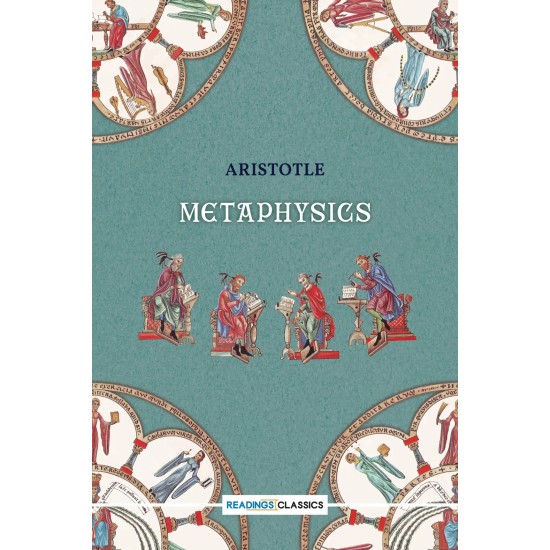
One of the foundational works of Western philosophy, Metaphysics is a profound inquiry into the nature of reality, existence and knowledge. Examining concepts such as being, substance, causation, potentiality and actuality, Aristotle seeks to uncover the first principles that govern the universe and the ultimate causes underlying all things.Through rigorous argument and careful observation, he investigates the relationship between matter and form, the nature of change and the existence of the Prime Mover as the source of all motion. Rich in philosophical insight and intellectual depth, Metaphysics has shaped centuries of thought, profoundly influencing theology, science and philosophy from the ancient world to the present day.Challenging yet immensely rewarding, it remains an îndispensable work for anyone seeking to understand the fundamental questions of existence and the enduring legacy of one of history's greatest philosophers.
About Aristotle
Aristotle was an ancient Greek philosopher and scientist, who pioneered many contemporary disciplines. Together with Plato, Aristotle is regarded as a founding figure of Western philosophy. He was born in 384 BCE in Stagira, Chalcidice, Greece. His works have served as the basis for many philosophical movements including Renaissance, Reformation and the Enlightenment. Aristotelian thought also influenced Medieval Islamic philosophy. A lot of jargon, terminology and lexicon in philosophy has been borrowed from Aristotle's work.His intellectual range was extensive and included logic, history, ethics, biology, chemistry, political theory, psychology, metaphysics, philosophy of science, and philosophy of mind. His work remained unsurpassed in zoology until the 19th century. His writings on metaphysics and political theory are still debated in contemporary philosophical and political studies. He died in 322 BCE, in Chalcis, Euboea.
| Book Attributes | |
| Pages | 352 |